Vehicles
An aluminum bracket for a van accessory
Cut a small aluminum bracket for a van fan, light, or shelf. Not a method for seats, belts, fuel parts, or anything that carries a person.
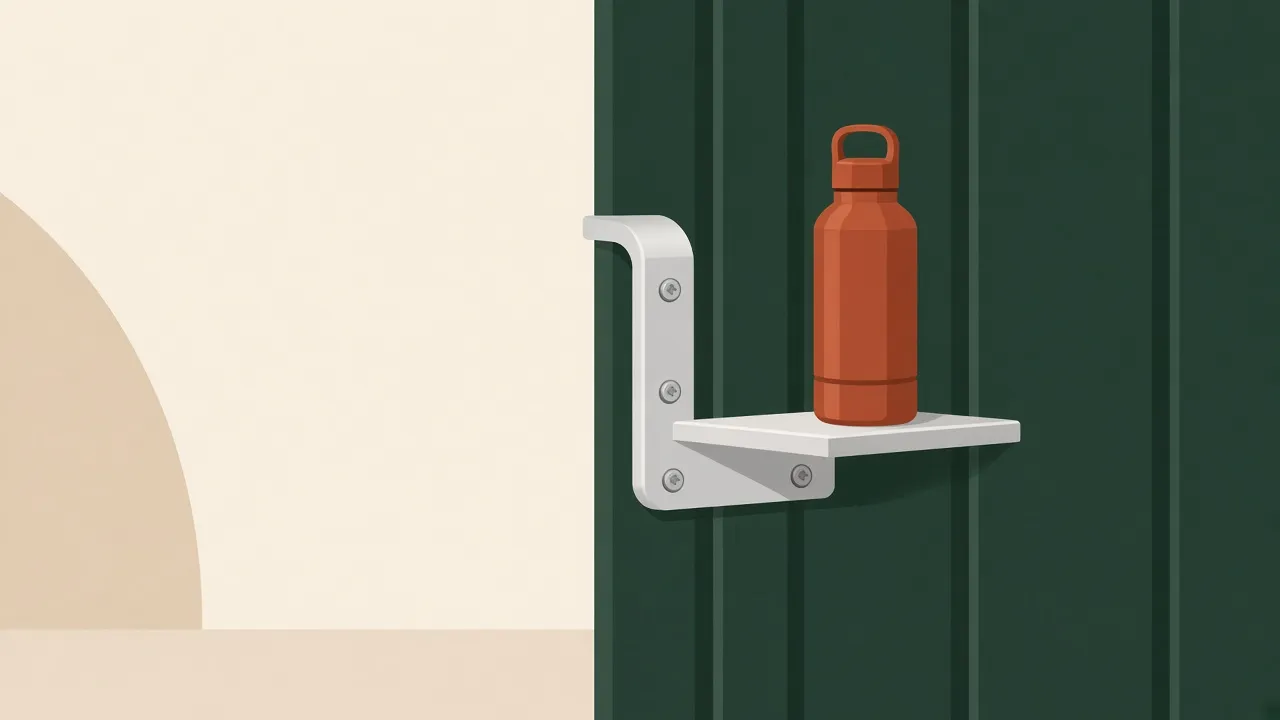
Van walls are ribs, windows, and a curve that no universal L-bracket quite matches. A small aluminum bracket for a fan, a reading light, or a shelf that holds books and not a person is a normal sheet-metal file. A bracket for a seat or a belt is a different industry.
Read what vibe manufacturing is for the loop. Then read the stop list below before you open a prompt. The same “custom plate, purchased hardware” split is what makes a dog-door panel reasonable.
The problem
The accessory you bought has a hole pattern. The van has a rib, a spar, or a plywood liner that does not share that pattern. You need a plate that picks up holes you can actually fasten, and presents the accessory’s holes on the face you can see.
Reasonable versions:
- A fan shroud or a light bar’s feet, where the fan or the light is a commercial product and the bracket only locates it.
- A small shelf support for a light load, fastened into ribs or into blocking you installed, with the shelf itself not asked to be a bunk.
- A cover plate over an odd hole, doing no structural work.
Not this project:
- Seat bases, swivel plates that carry a seat, seatbelt anchors, ISOFIX, beds that restrain a sleeper in a crash, roof racks, hitch parts, steering, brakes, fuel, or propane.
- High-current electrical lugs and inverter mounts where a loose connection is a fire. Locate a light with this method. Land battery cable with the inverter maker’s hardware.
- A bracket that exists because the fastener would otherwise go into thin sheet with no nut on the back. If you cannot say what the bolt threads into, you do not have a mount.
Workflow
1. Measure
Measure the vehicle, not a forum diagram of a similar year.
- The hole pattern of the fan, light, or shelf cleat, from the object.
- The rib spacing and the face you can put a washer on. Note where you cannot see the back of the panel.
- Thickness of any liner the bolts must pass through.
- The curve. A straight bracket on a curved pillar leaves a gap. Decide whether a simple bend closes it or whether you are forcing a flat part onto a barrel.
- The fastener size you will buy. Measure that bolt. Do not design a 6 mm hole for a bolt you do not have.
Write millimeters. Photograph the tape on the rib. Mark, in the notes, the sentence “this bracket does not carry a person.” If you cannot write it, stop.
2. Prompt for a CAD file
Ask for a sheet part with bends the shop can make. Name the alloy only as a preference the shop may not stock.
Model a sheet-aluminum bracket, about 2 mm thick, for a purchased 12 V fan.
The fan's four holes are on a 70 mm square. The van rib is 30 mm wide.
The bracket is an L: a 90 mm leg against the rib with two 6.5 mm holes,
and a 80 mm leg that presents the fan's hole pattern.
Inside bend radius per a typical sheet-metal rule of thumb for this thickness.
No seat, no belt, no fuel fitting.
Export DXF of the flat pattern and STEP of the bent part, in millimeters.
Put your hole coordinates in a sketch the tool cannot “tidy up.” Tell it not to optimize the pattern into a centered square if your fan is not square. Fans lie in product photos.
3. Prototype
Cut the flat pattern out of cardboard or thin plastic and bend it with tape. Hold it to the rib. Offer the fan up. Look for the bolt hitting a window frame, a wire, or a liner you forgot. A cardboard L will not tell you the aluminum’s springback. It will tell you the hole is in the wrong place, which is the expensive mistake.
Do not drill the van until the cardboard matches. Drilling a rib to discover a 5 mm error is how you end up designing a second bracket to hide the first holes.
4. Review
Open the flat DXF and the bent STEP. Check units. Check bend radius and flange length against the shop’s design rules. SendCutSend is one example of a shop that publishes rules for bends and hardware. If your inside radius is tighter than they will bend, the file is a wish.
Count holes. Compare them to the bolts on the bench. Confirm there is a washer or a nut path on the back of every fastener. If the bracket is only stiff because you made it thick, and the shop’s minimum bend radius then will not form, you have a machining job instead of a sheet job. Xometry is an example of a marketplace for CNC parts when a fold will not do. Still not a seat bracket.
Look at the load again. A fan is light. A shelf of books can be less light than you think once you add a pothole. If you are unsure, make the shelf shorter or buy a commercial van cabinet. Uncertainty here is a reason to simplify, not a reason to add a rib in the model and feel better.
5. Send it to a fabricator
Upload the flat pattern and the bent model if the shop asks for both. Ask which alloy and temper they will actually cut. Do not insist on a grade you copied from a forum if it is not on their list. Specify the hole sizes. Deburr matters on a part you will handle in a moving vehicle. Ask if that is included.
When it arrives, fit it with the cardboard still in mind. If a hole is off, slotting it by hand can be fine for a light fan and a bad idea for a row of holes that then don’t share the load. A recut is allowed.
Install with the fasteners you designed for, into structure you identified. A sheet-metal screw in thin skin is not the design you drew.
Tools and services
- Tape, calipers, the accessory, and a look at the back of the panel.
- Cardboard for the flat pattern.
- A CAD file in DXF and STEP.
- A sheet-metal shop for a bent bracket, or a CNC shop if the shape will not fold.
- Bolts, nuts, and washers purchased to match the holes, plus a thread locker if the accessory’s own instructions ask for it.
Cost and time
Estimate, not a quote. A small aluminum bracket, cut and bent, often falls somewhere from a few tens of dollars to a bit over a hundred before shipping and hardware. Thickness, the number of bends, and whether they have to tap holes move it. Shipping a flat part is part of the real cost. The range is a planning estimate so you do not confuse this with either a free scrap project or a full interior build. Get the quote.
Estimate, not a schedule. Measuring and a cardboard template can be half a day if the rib is accessible. The shop’s queue is theirs. Plan a revision. Do not book a departure around a bracket that has not been test-fit.
Pitfalls
- Any seat, belt, bunk restraint, rack, hitch, fuel, or brake part hiding inside an “accessory” prompt.
- Drilling the van before the template matches.
- A bend radius the shop will not form, discovered after you paid for a flat that cannot become the STEP you viewed.
- Fasteners into unsupported sheet metal because the rib was 20 mm away from the pretty location.
- Mixing a high-current electrical joint into a light-duty bracket. Different hardware, different failure.
- Inventing a load rating in the filename. The shop cutting the profile is not signing that number.
- The same temptation as a gym clip: the generated part slowly migrates onto a load it was never meant to see. Keep it on the fan.
FAQ
Can I use this method for a seat, seatbelt, or bed that has to hold a person?
No. Seats, belts, rollover structure, and anything that restrains a person are outside this project. Buy hardware built for that job. This note is a light accessory bracket for a fan, a lamp, or a small shelf.
Is a chatbot's aluminum thickness a structural calculation?
No. The model can draw a shape. It does not know your road, your fastener, or what the bracket will see in a pothole. Keep the load light, use fasteners into structure you understand, and do not treat a generated file as an engineering sign-off.
Sheet metal or a machined block?
A bent sheet bracket is the usual match for a fan or a light. A machined block is for a shape sheet cannot fold. Either way, read the shop's bend and thickness rules before you fall in love with a render.
Does the cost range include installation?
No. It is a rough estimate for the cut or bent part. Fasteners, finish, shipping, and your own install time are extra. The quote from the shop is the price of the part.