Workshop
ScanRuler: a free scan-to-CAD tool from CNC Kitchen
ScanRuler is a free, open-source scan-to-CAD tool from CNC Kitchen. It runs in the browser, can export STEP, and an AI agent is optional.
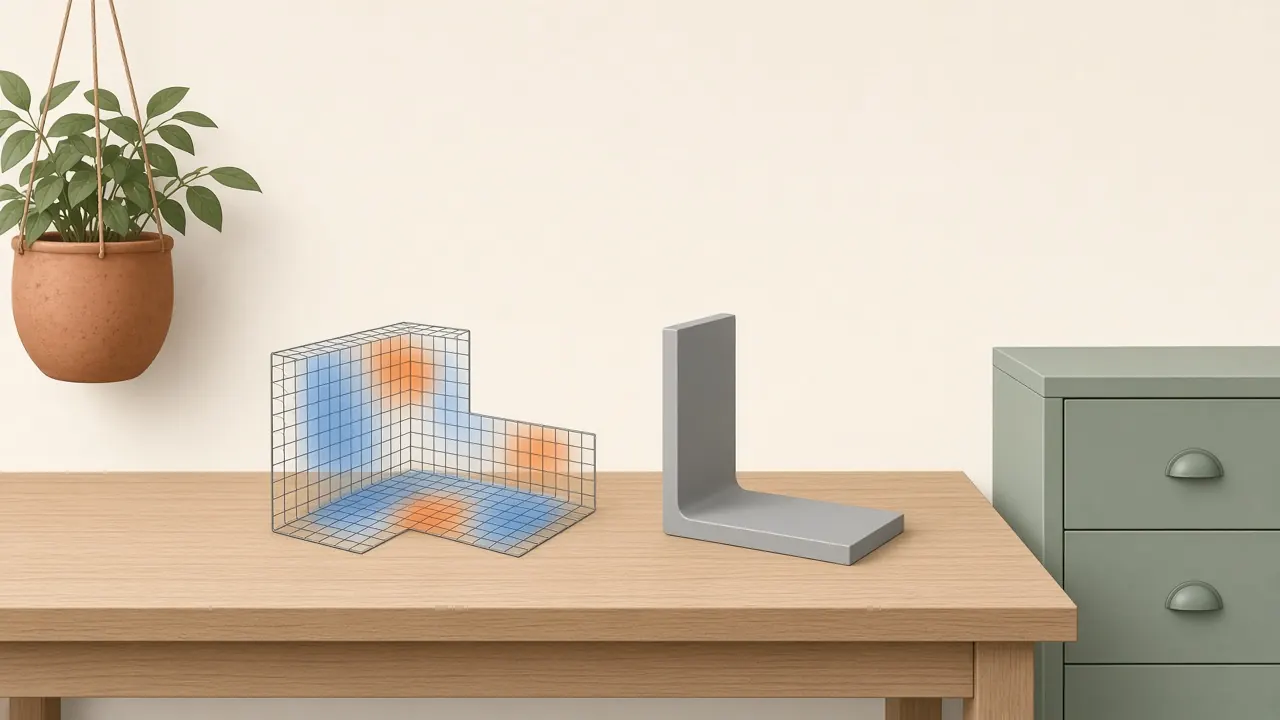
Source: Stefan of CNC Kitchen, in 3D Scanning Will Never Be the Same Again! (feat. Elegoo M1 Ultra), and his blog post ScanRuler: free 3D scan reverse engineering (31 October 2026). The software is at scanruler.com and GitHub. This is an independent summary. Stefan, CNC Kitchen, Elegoo, Anthropic, Autodesk, Zeiss/GOM, Bambu Lab and the other brands shown have not reviewed or endorsed it. We did not run ScanRuler, and we did not scan with an M1 Ultra.
Sponsorship. Elegoo sponsored this video. A “Sponsored by ELEGOO” graphic appears while he introduces the hardware, and the blog says Elegoo sponsored the video this article is based on. It is not an unsponsored scanner review. He states that the Elegoo M1 Ultra starts at $1,599, the early-bird or starting price as shown in late October 2026. No other price is added here, and that figure is not converted.
What is ScanRuler?
ScanRuler is a free, open-source scan-to-CAD tool from Stefan of CNC Kitchen, published at scanruler.com and on GitHub, under AGPL 3.0. He says it runs locally in the browser, with no installation, no tracking and no cookie banners, and that files are processed on your machine and do not leave it. Workspaces on screen are 3D Measure, 2D Measure, Surface Deviation, Wall Thickness, Mesh Tools, and Reverse Engineer. Fitted features can be exported as STEP. Connecting an AI agent through an MCP server is optional; he says you can use the whole tool without an agent. We did not run ScanRuler.
What he built, and why
Scanners, he says, have become good and affordable. The software that comes with them often only lets you capture a part. Specialized analysis and reverse-engineering tools are expensive. He shows Zeiss Inspect behind a registration wall, and notes that one such tool moved there after Zeiss bought GOM.
ScanRuler is his answer: free, open source under AGPL 3.0, no installation, no tracking, no cookie banners. It runs locally. Files are processed in the browser, on your machine, and do not leave it. He has described the project as vibe-coded. That is his wording for how he built it, not a verdict on the ball-bar numbers below.
Workspaces on screen are 3D Measure, 2D Measure, Surface Deviation, Wall Thickness, Mesh Tools, and Reverse Engineer. Fitted features can be exported as STEP. Connecting an AI agent through an MCP server is optional. He says you can use the whole tool without an agent.
When he does use an agent, Claude Desktop is what he shows. Setup is documented on GitHub. The easy path he describes is to turn the server on in ScanRuler’s settings and ask Claude or Codex to connect. A graphic in the video reads AI Agent, then MCP Server, then ScanRuler. In Claude Desktop the model line reads Opus 5.5 High. He says he has had the best agent results with Opus 5.5. On-screen comparisons show Haiku 5.5 and QWEN 3.6 35B A3B producing messy, broken CAD next to that. Those are his examples, not a benchmark we ran. Less capable models, including local ones on the hardware he has, can do a terrible job. He expects that to improve.
A ball bar, as he states it
He calibrates the M1 Ultra with the included precision glass plate in Elegoo Scan. He then scans a ball bar, precision spheres on a carbon-fiber rod, several times, at different angles, in cross-line and parallel-line laser modes.
In ScanRuler’s 3D Measure workspace he fits spheres and measures center-to-center distance. The on-screen specification is 0.02 mm + 0.06 mm/m. At this length he states a specified accuracy of 0.035 mm, which he calls about 1.5 thou. That figure is 0.02 mm plus 0.06 mm per metre across 257 mm, which comes out at about 0.035 mm. All nine scans were within that spec. The largest deviation he states is 0.03 mm over 257 mm. Those are his test results, not measurements from this site.
A few workshop demos
A wheel, markerless, in the garage. He scans his brother’s wheel with the cross-line laser and no markers. The scanner is battery-powered for this shoot. This is not the later Vespa Wi-Fi mode, which he says is slower and cannot do markerless laser-line scanning. He aligns the scan and, as an aside, says he can see a camber issue and that the ten-year-old tyres should probably be replaced. That is his comment from a rough scan, not a diagnosis here. The bolts are a Volkswagen style with spherical seats rather than simple tapers. Fitted spheres put the seat diameter around 26 mm. The numbers vary. The scan was aimed at the hub. Planes on the flange and the rim faces give width and offset. In 2D Measure he fits a circle through five bolt centers for the pitch-circle diameter, and says it was basically spot-on against the specification. He does not state a millimeter PCD this article will repeat.
The same ABS case, cold and hot. He prints one rugged ABS case with the door open and the heater off, and another with the chamber at 65°C throughout. Both are scanned in cross-line laser with no surface spray, including on black glossy plastic. Top and bottom scans are merged in Elegoo Scan. Against the original print model, auto-aligned, the average deviation is around 0.3 mm for both at first glance. An animation shows the cold print warping, with large flat regions bowing inward, while the hot print stays mostly flat and shrinks as a whole. He measures a major dimension, sets the scaling in the slicer to 100.6 percent in Bambu Studio, reprints, and rescans. He says that rescan almost perfectly matches the reference. Corners can still lift when the plastic does not cool quickly enough. He mentions possible future pre-deformation. Bambu Studio appears as the slicer. A printer model is not named here.
Wall thickness on a vacuum-formed hood. Flat, featureless surfaces are unreliable without markers, so he uses markers on the part and printed targets around it, then cross-line laser on both sides, especially the bends. In the mesh workspace he had to flip surface normals that were the wrong way out. That workspace can also close holes, smooth, and Boolean with fitted features. The thickness map is thickest near the edges, which he thinks were clamped. He suspects the original sheet was 3 mm. The top is already more than a millimeter thinner, and not uniform. The large lower bends are the thinnest, around 1.4 mm, less than half the original thickness. He presents that as process development and a quality check.
A Vespa housing, shown fitted, not proved as a repair. A piece of his Vespa’s engine housing is broken, and he no longer has the fragment. The scooter in the footage is blue. For this scan he uses the M1 Ultra’s wireless Wi-Fi mode. It still needs a PC or Mac. There is no cable. A knob sits on top. The computer joins the scanner’s Wi-Fi, and the screen mirrors the computer. He says this mode is a bit slower, and markerless laser-line scanning is not available, so he uses markers. Scanning takes about a minute in parallel laser mode, including the fracture surface.
In the reverse-engineering workspace he fits a plane to the rim, sketches the missing wall with some overlap, and extrudes. Mesh Tools then offers Trim to Scan, which he calls virtual kintsugi: ceramic repair, done here with a scan. The tool typically finds the fracture. He can leave a small gap for glue or extra tolerance. Trim to the Break extends the fracture and cuts the overlapping wall to match. A gray printed piece is shown physically fitted on the housing.
That is a demonstrated fit of a printed patch. It is not a validated running repair, and it is not a structural sign-off. A glue-in print on an engine casing is not automatically safe to run. This page does not give instructions for repairing a load-bearing engine case.
An agent, notes, and two prints that are not the same kind of fit. The agent is not a converter that turns every triangle into a CAD face. He wants it to pull design intent out of a noisy scan. A typical run is a folder with the scan, a short description, and more context if you have it. ScanRuler includes guides. The agent examines, aligns, fits features, sections, plans, and builds. Simpler designs take a few minutes to an hour. Then he looks at deviation and exports STEP, or keeps editing in ScanRuler. A notes tool lets him pin text on the part before, during, or after a run.
On a fridge bracket, the inner connection is broken. He pins a note asking for that bridge back, including a description of it as a simple rectangular bridge. About a minute later he has a reverse-engineered model with the bridge repaired. A gray printed repair and the white original are held side by side. They are not shown fitted back into a fridge. Do not read that as an in-fridge fit.
A second fridge part, a triangular holder for his aunt, is one he says he promised a year ago. He asks Claude to reverse engineer it and fix the broken section at the top. Pointing out the fracture surfaces helps. The video does not show that particular print installed.
A bike computer is harder. The agent struggles and needs back-and-forth. He then asks it to design a 3D-printable TPU sleeve, with cutouts, and about 1.2 mm minimum wall thickness. The computer is a Sigma ROX. A blue TPU sleeve is shown fitted on it. He says the sleeve fits. That is what he shows, not a product we tested.
He also drops the ball-bar scans in a folder and asks Claude to analyze them and write a report, optics against laser modes. The agent can drive the other workspaces. It is still optional.
Complex parts, freeform surfaces, and very rough castings often are not great. He shows an Artec 3D scan of a complex suspension bracket as that kind of case. Some of the limit is ScanRuler, and some is the agent.
What this shows, and what it does not
| What he shows | What it does not show |
|---|---|
| A free, local, AGPL tool with measuring and reverse-engineering workspaces | That we installed it or checked the license text ourselves |
| Nine ball-bar scans inside the stated 0.035 mm spec, worst 0.03 mm over 257 mm | Our own accuracy test |
| An M1 Ultra, in a video Elegoo sponsored, starting at $1,599 as he states | Any other street price or discount |
| A markerless garage scan of a wheel, and a separate, slower Wi-Fi mode on the Vespa | That those two modes are the same |
| Cold ABS bowed; a 65°C print shrank more evenly; 100.6 percent scale then matched more closely | A named printer model |
| Hood stock he suspects was 3 mm, thinner on top, about 1.4 mm at the lower bends | A lab certificate for that sheet |
| A Vespa patch shown fitted on the housing | A safe, glued, road-ready engine-case repair |
| A fridge repair print held beside the original | That print installed in a fridge |
| A blue TPU sleeve shown on a Sigma ROX | A sleeve we tested |
| Opus 5.5 as his best agent result; weaker models messy on screen | A benchmark we ran |
What is worth copying
Measure the scan before you trust a rebuild. A deviation map against the CAD you meant to print will show warp that a single caliper miss. Notes pinned on a fracture are more useful than “fix it”. Export STEP if you need to edit the part later. Print a test and compare it with the real object. A side-by-side photo and a part clicked into place are different claims. Say which one you have.
An engine housing, a wheel stud, or anything that holds a person stays off this loop. Buy or machine the part that was designed for that load.
Pitfalls
- Sponsorship. The scanner footage is an Elegoo sponsorship. Treat the hardware praise as his, in that context. The $1,599 figure is the starting price he stated.
- Optional does not mean unused. The measuring workspaces do not need Claude. The reverse-engineering claims he is most pleased with, on the fridge bridge and the sleeve, did use an agent.
- Model choice. He shows weaker and local models making broken geometry. Opus 5.5 is his report, not a promise that every plan includes it.
- Freeform and castings. A suspension bracket scan is his example of a poor fit for this approach.
- Wi-Fi is a different mode. Markerless cross-line in the garage is not the Vespa’s Wi-Fi session. That session needs markers and, he says, is slower.
- A fitted patch is not a running repair. The gray Vespa piece is on the housing in the video. Do not start the engine on the strength of a scan-trimmed print.
Tools he names
- ScanRuler, AGPL 3.0, and the GitHub repository.
- Elegoo M1 Ultra and Elegoo Scan, in a sponsored video.
- Claude Desktop, with Opus 5.5 High on screen, and Codex as another client he mentions. Haiku 5.5 and QWEN 3.6 35B A3B appear as weaker comparisons.
- Bambu Studio, briefly, for the 100.6 percent ABS scale.
- Zeiss Inspect, as the registration-wall example after Zeiss bought GOM.
Related
Photos instead of a scan, for a light clip, are Michael Lydick’s cargo-net replacement. A chat model asked to build a manifold from two scans, and told not to open Fusion, is David Fox’s inlet-manifold demo. Claude driving Fusion itself, through a different MCP server, is John Saunders’s STL rebuild. How a chatbot usually writes CAD code is AI CAD tools vs ChatGPT, and the wider tool list is text-to-CAD in 2026. The measure-and-print loop is how to make a 3D-printable part with AI. When a mesh looks finished and is not, see why AI-generated 3D prints fail.
FAQ
What is ScanRuler?
ScanRuler is a free, open-source scan-to-CAD tool from Stefan of CNC Kitchen. He says it runs locally in the browser, with no installation, no tracking and no cookie banners, and that files do not leave your machine. Workspaces include 3D Measure, 2D Measure, Surface Deviation, Wall Thickness, Mesh Tools and Reverse Engineer. Fitted features can be exported as STEP. An AI agent, connected through an MCP server, is optional. This article did not run the tool.
Is ScanRuler free and local?
He says it is free, open source under AGPL 3.0, with no installation, no tracking, and no cookie banners. Files stay in the browser on your machine. This article did not run the tool.
Do you need an AI agent to use it?
No. He says the agent connection is optional and that the measuring and reverse-engineering workspaces work without one. He has had his best agent results with Opus 5.5.
Was the CNC Kitchen video sponsored?
Yes. Elegoo sponsored it, and the video features the Elegoo M1 Ultra. He states a starting price of $1,599. That is his figure, not a quote from this site.
Did the TPU sleeve fit the bike computer?
He shows a blue TPU sleeve fitted on a Sigma ROX bike computer, and he says it fits. That is his demonstration, not a product we tested.
Is a printed engine-housing patch safe to run?
Not on the strength of this demo. A gray printed piece is shown fitted on the Vespa housing. That is a demonstrated fit, not a validated running or structural engine-case repair. Do not treat a glue-in print as a road-ready casing.